
The Body’s Internal Off Switch
7 Simple Vagus Nerve Exercises for Anxiety : That feeling of a knot in your stomach, a pounding heart, and racing thoughts? That’s your Sympathetic Nervous System (“fight-or-flight”) taking over.
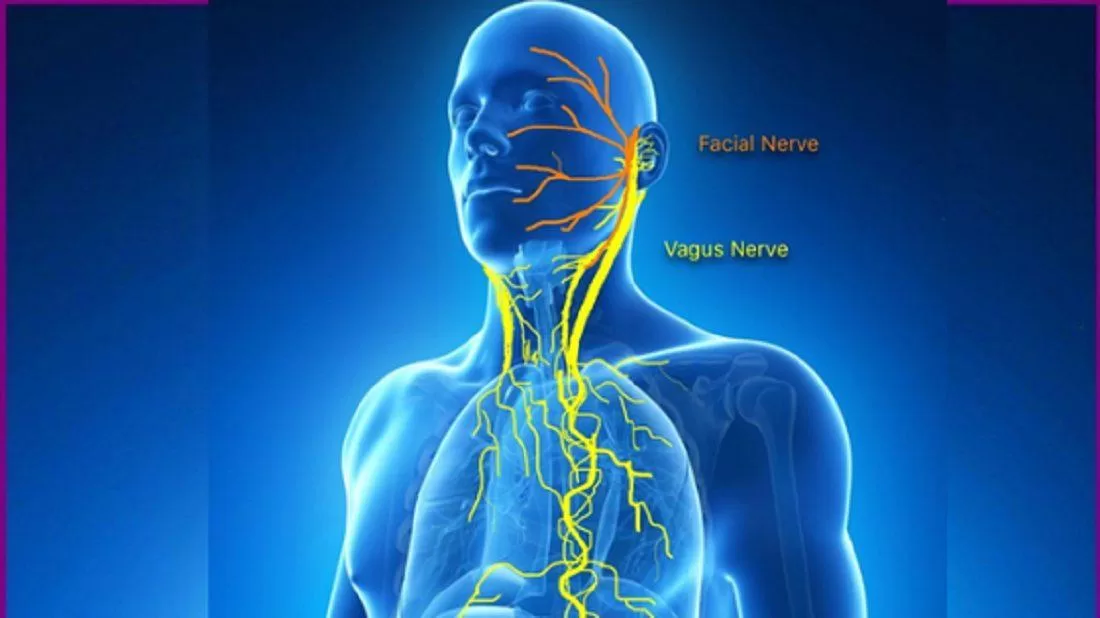
The Vagus Nerve: Introduce the Vagus Nerve (Cranial Nerve X), the longest nerve in the autonomic nervous system. It acts as the “superhighway” connecting your brain to your heart, lungs, and gut (the gut-brain axis).
Vagal Tone: Explain that good vagal tone means your body can quickly transition from “fight-or-flight” back to “rest-and-digest.” Low tone means chronic stress and anxiety.
The Solution: This guide introduces 7 science-backed Vagus Nerve Exercises for Anxiety that you can use instantly to calm your nervous system and strengthen your vagal tone over time.
Section 1: 7 Simple Vagus Nerve Exercises for Anxiety The Neurobiology of the Vagus Nerve
The Polyvagal Theory: Briefly explain Dr. Stephen Porges’ theory, focusing on the nerve’s role in social engagement and safety.
The Chemical Connection: Vagus nerve stimulation leads to the release of acetylcholine, a neurotransmitter that acts as a brake on heart rate and reduces inflammation throughout the body.
Inflammation and Anxiety: Cite research showing that chronic anxiety and depression are linked to high inflammation. Strengthening the vagus nerve is a direct anti-inflammatory action.

Section 2: 7 Simple Vagus Nerve Exercises for Anxiety
Instructions: These can be done anywhere, anytime. Focus on repetition and consistency.
Exercise 1: Diaphragmatic Breathing (Slow, Low, and Long)
Technique: Focus on breathing deeply into the belly, not the chest. Exhalation must be longer than inhalation (e.g., 4 seconds in, 6 seconds out). Long exhalations immediately signal safety to the Vagus Nerve.
Exercise 2: Gargling and Humming (Activating the Throat Branch) for 7 Simple Vagus Nerve Exercises for Anxiety
Technique: The Vagus Nerve runs through the vocal cords. Vigorous gargling (until tears well up) or loud humming (like “Omm” or “Mmm”) vibrates the nerve, increasing vagal tone.
Exercise 3: Cold Exposure (The Shock Effect):
Technique: Splashing cold water on the face or a 30-second cold burst at the end of a shower. The sudden shock jolts the Vagus Nerve into action, forcing a rapid “reset.”
Exercise 4: The Diving Reflex:
Technique: Hold your breath and submerge your face in ice-cold water (or a bowl of ice water). This triggers the mammalian dive reflex, which drastically lowers heart rate.
Exercise 5: Neck and Ear Massage:
Technique: The Vagus Nerve has branches around the outer ear (the concha) and runs down the neck. Gently massaging behind the ear lobe and down the neck can be deeply soothing. (Referencing the sensory grounding from our Ayurvedic Morning Rituals
Exercise 6: 7 Simple Vagus Nerve Exercises for Anxiety The “Side-Lying” Rebalance:
Technique: Lying on your side, place a rolled towel/blanket under your neck/head. Hold this position for 5-10 minutes. This provides a gentle pull on the neck, promoting muscle relaxation around the nerve.
Exercise 7: Laughter and Singing for Simple Vagus Nerve Exercises for Anxiety
Technique: Engaging the throat and diaphragm through loud singing or belly laughter is a powerful, natural vagal stimulant.
Section 3: 7 Simple Vagus Nerve Exercises for Anxiety Integration and Long-Term Vagal Tone Strengthening
Consistency is Key: Instant relief is good, but long-term anxiety reduction requires strengthening vagal tone daily. Aim for 5-10 minutes of one of the Vagus Nerve Exercises for Anxiety every morning.
Dietary Connection: The gut is lined with vagal afferent fibers. A healthy diet rich in fibre and probiotics (like the fermented foods in the South Indian Diet Plan supports vagal tone by reducing gut inflammation.
Exercise: Regular low-impact movement, like walking or gentle yoga, is a sustained, gentle way to manage the nervous system.
Conclusion
Summary: The power to calm your nervous system doesn’t lie in complex therapy, but in accessible, physical tools like the Vagus Nerve Exercises for Anxiety. By mastering just one or two of these techniques, you gain control over your internal state, replacing panic with peace.
Leave feedback about this