


Unlocking Natural Hormone Health with Seed Cycling for Hormonal Balance
For many women, the menstrual cycle is a source of chronic discomfort: unpredictable periods, crippling PMS, anxiety, and painful cramps. These symptoms are often signals of underlying hormonal dysregulation—specifically, an imbalance between estrogen and progesterone. While modern medicine often turns to synthetic hormones, ancient wisdom and emerging nutritional science point to a gentler, food-based solution: Seed Cycling for Hormonal Balance.
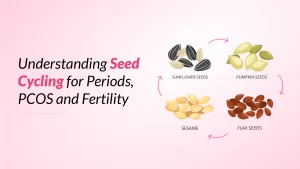
Seed cycling is a deceptively simple yet powerful technique that uses four specific seeds—Flax, Pumpkin, Sesame, and Sunflower—consumed at different times of the month. The goal is to provide targeted nutritional support to the body during its two main phases: the Estrogen-dominant Follicular Phase and the Progesterone-dominant Luteal Phase.
This practice supports the body’s natural processes, helping it manage estrogen detoxification and boost progesterone production without artificial inputs. It’s an ideal natural remedy for conditions like PCOS, endometriosis, irregular cycles, and perimenopause symptoms.
This comprehensive guide will break down the science, provide the exact daily protocol, and explain how to successfully implement Seed Cycling for Hormonal Balance into your daily routine.
1. The Science Behind Seed Cycling for Hormonal Balance
Seed cycling works because the seeds are miniature powerhouses of key micronutrients, essential fatty acids, and unique plant compounds called lignans. These components directly influence the synthesis and metabolism of sex hormones.
1.1. The Role of Lignans
Flax and Sesame seeds are rich in lignans, a type of polyphenol. Lignans are crucial because they act as phytoestrogens—compounds that weakly bind to estrogen receptors. This helps in two ways:
- Excess Estrogen: In cases of high estrogen (or estrogen dominance), lignans can block stronger, potentially harmful natural estrogens, promoting their safe excretion by the liver.
- Low Estrogen: In cases of low estrogen, lignans can provide a mild estrogenic effect, helping to fill the gap.
1.2. Essential Fatty Acids and Hormone Production
Hormones are made from cholesterol, and their production relies heavily on healthy fats.
- Phase 1 (Follicular): Pumpkin seeds are rich in Omega-6s and Zinc. Zinc is essential for testosterone synthesis (a precursor to estrogen) and supports healthy egg maturation.
- Phase 2 (Luteal): Sunflower and Sesame seeds are rich in Omega-6s and Vitamin E. Vitamin E is vital for progesterone production, and the essential fats help stabilize cell membranes, which is crucial during the rise of progesterone.

2. The Step-by-Step Seed Cycling for Hormonal Balance Protocol
The protocol is split based on the two phases of a standard 28-day cycle. If you have an irregular cycle, you can cycle with the moon phases (Follicular on the New Moon, Luteal on the Full Moon).
Phase 1: The Follicular Phase (Days 1 to ~14: Period Start to Ovulation)
- Hormone Focus: Estrogen rises.
- Seeds to Consume Daily: 1 Tablespoon Ground Flax Seeds + 1 Tablespoon Ground Pumpkin Seeds
- Key Nutritional Goal: Promote healthy estrogen metabolism and provide the nutrients needed for the upcoming ovulation. Flax provides lignans for estrogen processing, and Pumpkin provides zinc for follicle stimulating hormone (FSH) response.
- When to Stop: Stop on the day you detect ovulation (either via Basal Body Temperature (BBT) rise, or an Ovulation Predictor Kit (OPK)).
Phase 2: The Luteal Phase (Days ~15 to ~28: Ovulation to Period Start)
- Hormone Focus: Progesterone rises.
- Seeds to Consume Daily: 1 Tablespoon Ground Sesame Seeds + 1 Tablespoon Ground Sunflower Seeds
- Key Nutritional Goal: Support the corpus luteum (which produces progesterone) and stabilize the uterine lining. Sesame provides Vitamin E and lignans to modulate the hormonal shift, and Sunflower provides selenium and Vitamin E, which are known to support liver function and progesterone pathways.
- When to Stop: Stop when your period arrives (Day 1 of the new cycle) and switch back to Phase 1 seeds.
3. Application and Troubleshooting: Making the Seeds Work
The success of Seed Cycling for Hormonal Balance relies on preparation and consistency.
- Grind, Grind, Grind: This is the most critical step. Seeds, especially flax, are not well-absorbed whole. The hard outer shell prevents the body from accessing the lignans and healthy fats. Always grind your seeds fresh daily (using a coffee grinder) or grind a 3-day batch and store it in an airtight container in the fridge to prevent oxidation.
- How to Consume: The taste is neutral and easy to mask. Mix the ground seeds into:
- Morning smoothie or yogurt.
- Oatmeal or cereal.
- Sprinkle them over salads or soups (best added after cooking to preserve nutrients).
- Tracking: To truly see results, you must track your cycle (PMS symptoms, mood, sleep, period start/end dates). Track for a minimum of 90 days (3 cycles).
- Troubleshooting Irregularity: If you have PCOS or amenorrhea, you may not have a natural cycle. You can either use the moon cycle protocol (New Moon = start Phase 1) or follow the advice in our Ayurvedic Rituacharya guide to stabilize your internal clock first.
4. Seed Cycling for Specific Conditions (H2) (Target: 350 words)
The practice of Seed Cycling for Hormonal Balance can be a powerful therapeutic tool for chronic conditions:
- PCOS (Polycystic Ovary Syndrome): PCOS often involves high androgens and estrogen dominance. The lignans in the seeds help regulate estrogen, and the zinc/selenium support better follicular development, gently nudging the body toward ovulation.
- PMS (Premenstrual Syndrome): PMS is heavily linked to a drop in progesterone during the late Luteal phase. The Phase 2 seeds are specifically designed to support progesterone, which can significantly reduce anxiety, mood swings, and bloating.
- Perimenopause: During the transition to menopause, hormones fluctuate wildly. Seed cycling provides a consistent baseline of micronutrients to mitigate hot flashes, mood changes, and irregular bleeding.
- Men: While seed cycling is primarily a women’s health tool, the Omega fatty acids and zinc are excellent for men’s prostate health and hormone metabolism.
Conclusion
Seed Cycling for Hormonal Balance is a commitment—it takes consistency and patience. But by intentionally feeding your body the exact nutrients it needs during each hormonal phase, you are choosing a path of self-care that works with your body’s natural rhythm, not against it. Give the seeds a chance. You may find that hormonal harmony is truly achievable on your own terms.
Call to Action
Ready to take control of your cycle? Start your Seed Cycling for Hormonal Balance plan with your next New Moon or the first day of your period! Download our free printable 3-month cycle tracker and share your biggest hormonal goal in the comments below!