
1. Ayurvedic Hair Care Tips The Root Problem: Why Modern Hair Routines Fail
Are you struggling with persistent hair fall, premature graying, or dry, brittle strands? We spend fortunes on chemical-laden shampoos and serums, but the results are often temporary. Modern hair care focuses on external fixes, masking the symptoms rather than addressing the core imbalance.
In Ayurveda, hair health is not superficial; it is directly linked to the health of your bone tissue (Asti Dhatu), proper digestion, and balanced Doshas—particularly Pitta. Excess Pitta (heat) in the body is the main culprit behind hair thinning, premature graying, and stress-induced hair loss.
The solution is a holistic approach. This guide provides 5 essential Ayurvedic Hair Care Tips that look beyond the surface, offering ancient wisdom and practical remedies to revitalize your scalp and promote genuine, lasting hair growth.
2. The Ayurvedic Philosophy: Hair as Asti Dhatu
Ayurveda views the hair as a byproduct, or Mala, of the bone tissue (Asti Dhatu). If your bones, joints, and nervous system are well-nourished, your hair will flourish.
The two main Dosha imbalances leading to hair issues are:
Pitta Imbalance: Leads to heat, inflammation, hair thinning, and premature graying. Requires cooling and detoxification.
Vata Imbalance: Leads to dryness, breakage, split ends, and frizz. Requires deep nourishment and oiling.
Implementing these Ayurvedic Hair Care Tips directly addresses these root causes, ensuring you are not just treating hair, but nourishing the Asti Dhatu.

3. 5 Essential Ayurvedic Hair Care Tips for Stronger Strands
These daily and weekly practices are the pillars of the Ayurvedic Hair Care Tips philosophy.
Tip 1: The Sacred Art of Warm Oil Massage (Shiro Abhyanga)
Oiling is the single most important practice. It calms Vata, strengthens the roots, and relieves stress which often causes hair fall.
The Ritual: Warm 2-3 tablespoons of oil (see Dosha-specific recommendations below). Gently massage your scalp using the pads of your fingertips for 5-10 minutes. Leave it on for at least 30 minutes, or overnight.
Frequency: Do this at least 2-3 times per week.
Tip 2: Using Bhringaraj—The King of Herbs
Bhringaraj (Eclipta Alba) is the most revered herb for hair. It’s a natural conditioner and revitalizer that actively promotes growth and helps maintain natural color.
The Application: Use an oil infused with Bhringaraj or mix Bhringaraj powder with water/yogurt to make a revitalizing scalp mask once a month.
Tip 3: The Power of Amla (Indian Gooseberry)
Amla is nature’s richest source of Vitamin C, a powerful antioxidant that helps maintain collagen levels and strengthens the hair follicles. It’s a cornerstone of effective Ayurvedic Hair Care Tips.
The Application: Use Amla oil mixed with your base oil, or drink fresh Amla juice (or powder mixed in water) daily to cool Pitta from the inside out.
Tip 4: Avoid Hot Water and Harsh Chemicals
Hot water strips natural oils, worsening Vata imbalance and causing dryness.
The Swap: Always use lukewarm or room-temperature water for washing. Choose natural, herbal shampoos (often Shikakai or Reetha-based) that don’t contain harsh sulfates or parabens.
Tip 5: Gentle Combing (Marma Points)
Aggressive brushing can cause mechanical breakage.
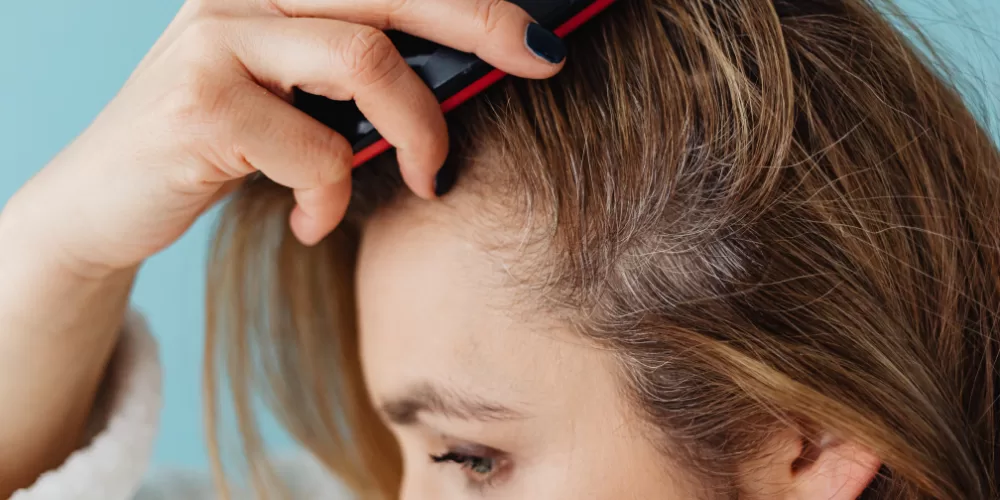
The Technique: Use a wide-toothed comb, especially when hair is wet. Combing gently stimulates the Marma points on the scalp, improving blood circulation, which is vital for nourishing the hair follicles and making this one of the most practical Ayurvedic Hair Care Tips.
4. Beyond Oil: The Internal Ayurvedic Hair Care Tips
Hair health starts in the gut. If digestion (Agni) is poor, the nutrients for Asti Dhatu are never formed properly.
Pitta Management: Since Pitta causes heat and premature graying, reduce spicy, fried, and fermented foods. Increase cooling, sweet, and bitter foods like cucumber, ghee, and green vegetables.
Toxins (Ama) Removal: Ensure you have regular bowel movements. Constipation allows toxins to build up, hindering nutrient delivery to the hair. Triphala taken before bed can help gently cleanse the digestive tract. (For internal cleansing strategies, refer to our Ayurvedic Detox (Panchkarma) At Home .
5. Choosing the Right Ayurvedic Oil for Your Dosha
Selecting the correct oil is key to personalized Ayurvedic Hair Care Tips:
| Hair Type/Imbalance | Recommended Oil | Why It Works |
| Vata (Dry, Frizzy, Brittle) | Sesame Oil or Almond Oil | Heavy, warm, and grounding; provides deep lubrication. |
| Pitta (Thinning, Graying, Inflamed Scalp) | Coconut Oil or Bhringaraj Oil | Cooling and restorative; reduces heat and inflammation. |
| Kapha (Oily, Heavy, Less Hair Fall) | Mustard Oil or light Sesame Oil | Warming, slightly less heavy; stimulates circulation without excessive oiliness. |
External Credibility: Research published in journals focusing on traditional medicine often highlights the potent anti-inflammatory and hair-growth promoting properties of Bhringaraj and Amla, validating them as core Ayurvedic Hair Care Tips.
6. Conclusion: Sustainable, Natural Growth
Hair vitality is a direct reflection of your internal balance. By incorporating these 5 essential Ayurvedic Hair Care Tips—prioritizing oiling, using powerful herbs like Amla and Bhringaraj, and managing internal heat—you move beyond temporary fixes toward sustainable, natural, and beautiful hair growth.
Leave feedback about this