
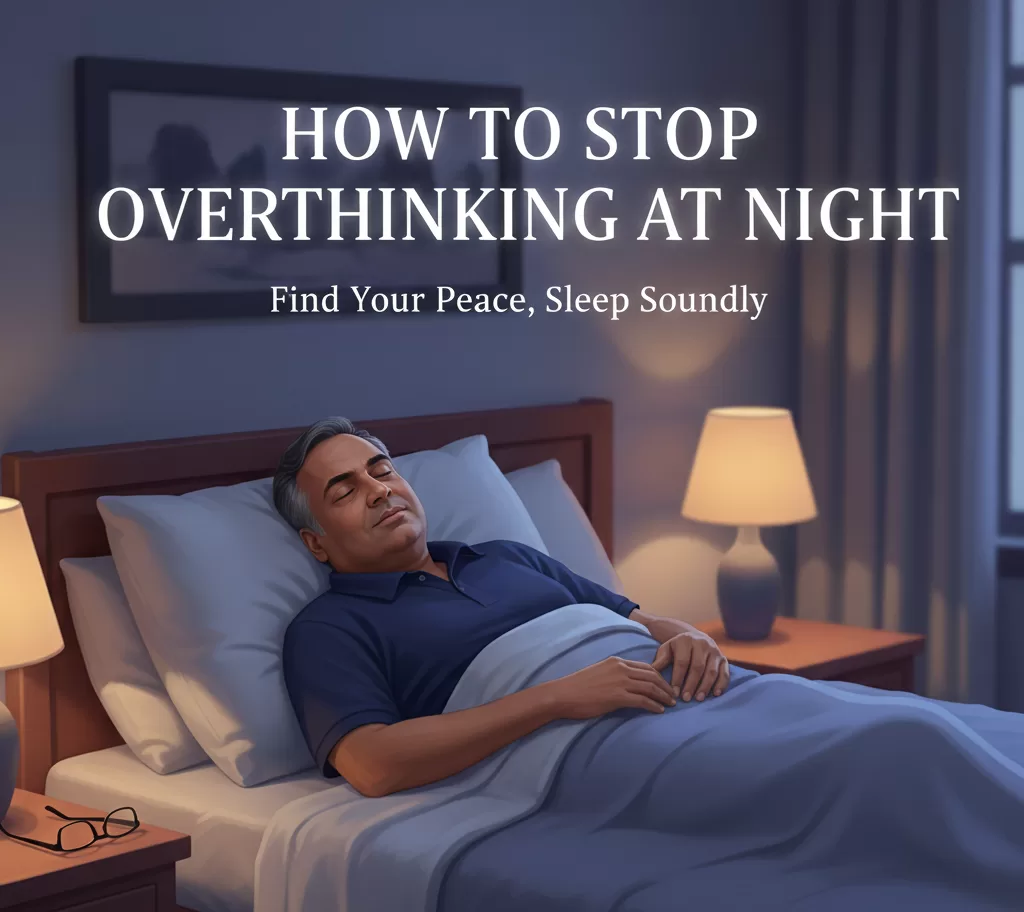
Stop Overthinking at Night
Do you ever lie in bed replaying old conversations, worrying about the future, or overanalysing every detail of your day?
You’re not alone. Overthinking at night is one of the most common reasons people struggle with sleep and anxiety. When the world quiets down, your mind often turns up the volume — leaving you trapped in a loop of “what ifs” and “should haves.”
But here’s the good news: you can train your brain to let go and rest peacefully. In this post, we’ll explore the psychological reasons behind night-time overthinking and share 10 proven, practical strategies to stop it for good.

💭 Why Do We Overthink at Night & How to Stop Overthinking at Night
At night, your mind finally gets a break from external distractions. That silence can bring buried worries, regrets, and plans to the surface.
A few common reasons include:
-
Unresolved stress or emotional baggage from the day
-
Screen time before bed, overstimulating your brain
-
Lack of a bedtime routine
-
Perfectionism or fear of failure
-
Hormonal or mental health imbalances (like anxiety or mild depression)
When your brain doesn’t get closure or calm, it enters “problem-solving mode” — even when there’s no real problem to solve.
🛌 10 Proven Ways to Stop Overthinking at Night
1. Create a “Brain Dump” Journal
Before bed, write down everything that’s on your mind — tasks, worries, or random thoughts.
✅ This clears mental clutter and sends a message to your brain: “It’s written down; you can rest now.”
2. Limit Screen Time an Hour Before Bed
The blue light from phones and laptops delays melatonin (your sleep hormone) and keeps your mind active.
Instead of scrolling, try reading a calming book or listening to soft music.
3. Practice Deep Breathing
One of the fastest ways to calm your overactive mind is through controlled breathing.
Try this: Breathe in for 4 seconds, hold for 4, exhale for 6.
It activates your parasympathetic nervous system — your body’s natural “relax” mode.
4. Set a “Worry Time” During the Day
Schedule 15 minutes in the afternoon to think, analyse, and even overthink if you must.
Your brain learns to delay those thoughts until that time, keeping your nights worry-free.
5. Practice Gratitude Before Sleep
End your day by listing three things you’re grateful for.
This small shift helps your mind focus on peace instead of problems and trains your subconscious toward positivity.
6. Avoid Caffeine and Sugar After 6 PM | To Stop Overthinking at Night
Caffeine and Sugar Both increase heart rate and alertness, making it harder to relax.
Switch to chamomile tea or warm milk — both have mild calming effects.
7. Try Progressive Muscle Relaxation
Starting from your toes, tense and then relax each muscle group up to your head.
It grounds you in the present and releases built-up physical tension.
8. Don’t Chase Sleep
The harder you try to “fall asleep,” the more anxious you become.
If you can’t sleep after 20 minutes, get up, read something calming, or dim the lights until you feel sleepy again.
9. Talk It Out
Sometimes, your mind overthinks because it feels unheard.
Call a friend, share your thoughts, or even talk to yourself kindly — it helps externalize what’s inside your head.
10. Practice Mindfulness or Meditation
Apps like Headspace or Calm can guide you through 10-minute night-time meditations.
Focus on your breathing and observe thoughts without judging them. Over time, your mind learns to quiet itself naturally.
💤 Bonus Tip: Build a Bedtime Ritual to Stop Overthinking at Night
A calm mind is a trained mind.
Build a nightly ritual — dim the lights, play soft music, light a candle, or do light stretching.
Your brain will begin to associate these cues with rest, helping you drift into sleep faster. This is the best & easy way to stop overthinking at night.
🌌 Conclusion – Stop Overthinking at Night
Overthinking at night can feel like a never-ending cycle — but it’s not permanent.
By learning to offload your thoughts, create calm habits, and manage your emotional energy, you can retrain your brain to relax when it’s time to rest.
Remember, the goal isn’t to silence every thought — it’s to create peace between your thoughts and your sleep.
Start small: write down worries, breathe deeply, and set a calming night-time routine.
With patience and practice, restful sleep will become your natural state — not a struggle.

Leave feedback about this